

Meet the people behind the stories at the 2027 Australian Wooden Boat Festival's Wooden Boat Symposium. From boatbuilders and maritime historians to sailors and adventurers, discover the knowledge, experiences and perspectives they'll be sharing as we explore the world of working boats, traditional craftsmanship and maritime heritage.
MEET THE PRESENTERS
Tasmanian Shipwrights Forum
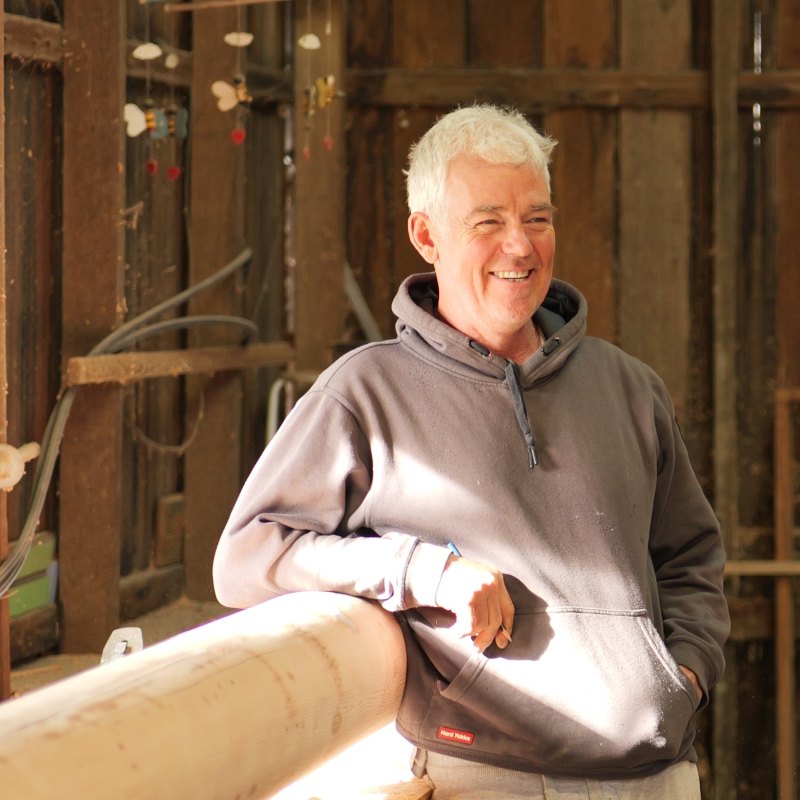
David began his boatbuilding journey in 1993 by joining the team restoring the NZ yacht Waitangi in Victoria Dock, Melbourne.
This led to his involvement in two more restoration projects, Ackrospire3 and Sayonara. In 2000 David moved to Queenscliff where he took up a residency at the Maritime Museum, working on various boatbuilding projects and completing the restoration of Pelican, a Lorne couta boat.
An opportunity came up in 2004 to move to Tasmania, and David was able to purchase a large workshop in Huonville where he has been ever since.
As well as many boatbuilding projects, Dave has spent time sawmilling, teaching woodworking skills, teaching sailing and working on the water at Huon Aquaculture.
The restoration of Kerrawyn over the last 12 years, breathing life into an old vessel, has been his most rewarding project so far.
Tasmanian Shipwrights Forum
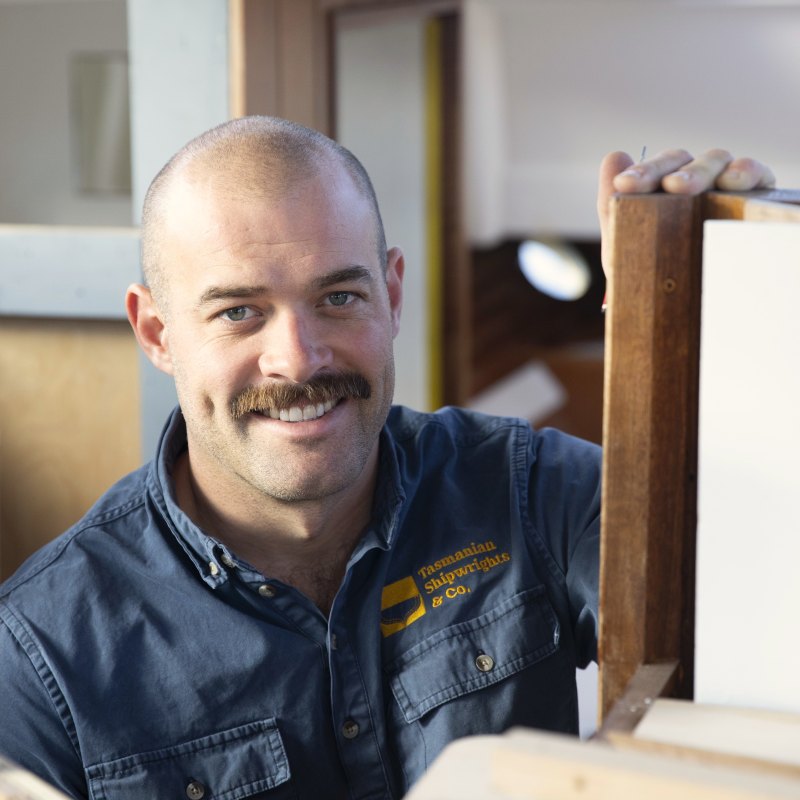
Nathan O'Neill is the business owner and director of Tasmanian Shipwrights and Co. Nathan moved to Tasmania in 2022 to learn how to build boats. Five short years later, he leads a small team that cares deeply for well-built wooden boats. Restorations and rebuilds keep the workshop busy in Oyster Cove Marina. Tradition, Floki, Mermaid, Peri and Mistral VI are just some of the boats that Tasmanian Shipwrights and Co. have brought back to life.

Tasmanian Shipwrights Forum
Thorfinn Cheney is an apprentice shipwright with Tasmanian Shipwrights and Co. Thor joined the team as the boatyard's first apprentice in 2024. A talented luthier and craftsman, he has excelled in restoring wooden boats. He's learnt and honed his skills during the rebuilds of Derwent Class yachts Mermaid and Peri, and while restoring the 40ft Max Creese yacht Tradition. Driven by his love of wooden boats, he looks forward to bigger scale projects and continuing to develop his fine woodworking skills on historic Tasmanian boats.
Tasmanian Shipwrights Forum
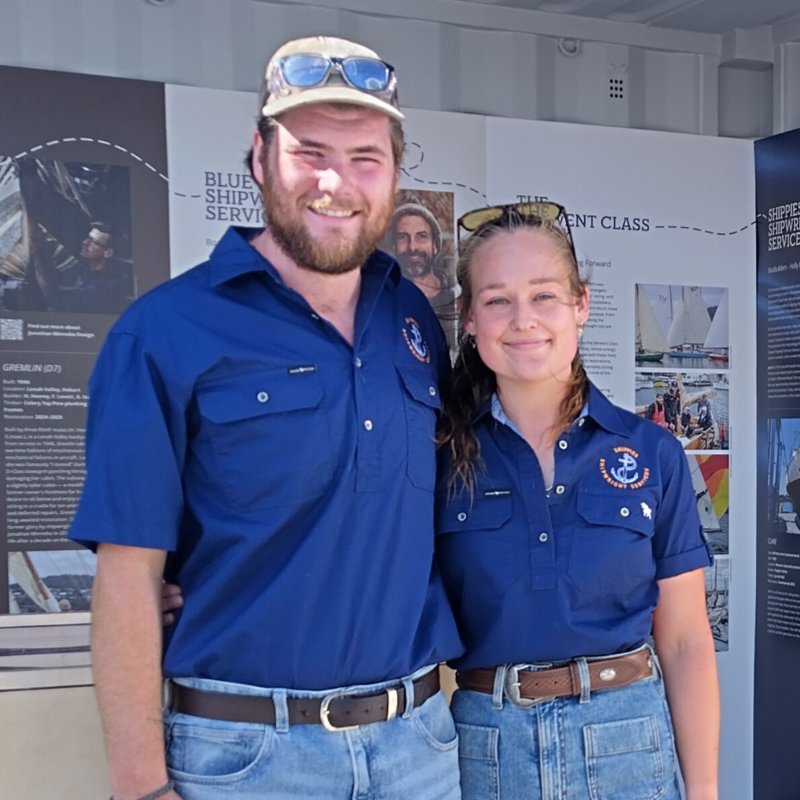
Having started their seafaring careers involved in tall ships in and around Australia. Holly and Jordy decided to pursue their passion for timber boat restoration and repair.
As fully qualified shipwrights, Holly and Jordy are now the owners of the Dunalley slipway, situated between the Denison Canal swing bridge and the Marion Bay Narrows. They slip vessels up to 60 tonne, for work including painting, antifouling, structural repairs, mechanical work and fitouts.
Holly and Jordy’s passion for wooden boats extends to their personal lives, as the very proud owners of the 1928 pearling lugger Torres Pearl. Holly and Jordy truly live and breathe timber vessels and love to share their passion and skills with clients and timber boat owners.
Tasmanian Shipwrights Forum
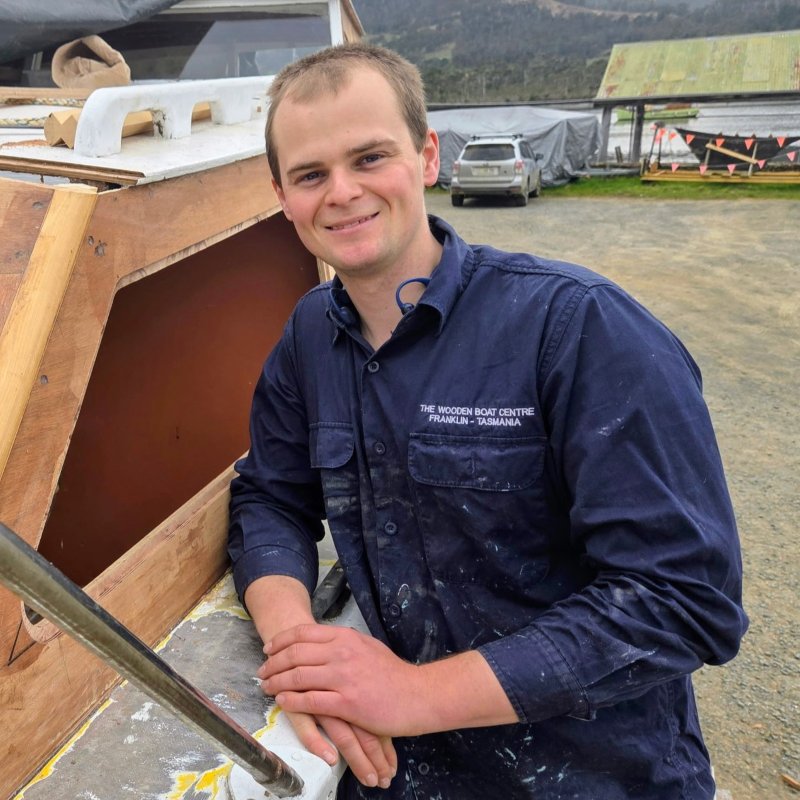
Originally from Samford Valley, Queensland, from a young age Thorfinn had an interest in woodwork and working with his hands. As part of his schooling, he built a boat and loved it. Throughout high school he also discovered rock climbing and after finishing high school started work as a rope access technician. That meant he was hanging off tall buildings and fixing things. After working for three and a half years Thorfinn was able to save enough money to move down to Tasmania in 2025 and completed the 12-month course at the Wooden Boat Centre. The Centre offered him an apprenticeship and he hasn’t left.

Tasmanian Shipwrights Forum
Cody Horgan has built his career as a boat builder/shipwright over 28 years, working on the waterfront in both Tasmania and Sydney. Cody graduated with a Diploma of Wooden Boat Building from the Shipwrights Point School of Wooden Boat Building (now the WBC). He then moved to Sydney to work at a range of boat sheds including the former Halvorsen sites at Ryde and Bobbin Head. After nine years of working on small craft, he went on to join a small team on the James Craig, spending 2½ years working alongside and guiding volunteers to maintain this historical icon. Cody then literally jumped ship, to work for eight years at the Australian National Maritime museum, as a shipwright on the Endeavour and amongst the smaller fleet vessels, including the Krait, Ena and Kathleen Gillett. More recently, since 2021, Cody became head trainer and manager at the Wooden Boat Centre, Franklin. At the WBC, with a great team of staff, students and volunteers, Cody has been able to ensure that the art of wooden boat building stays alive and relevant, in a world striving to be dominated by a digital ethos. .
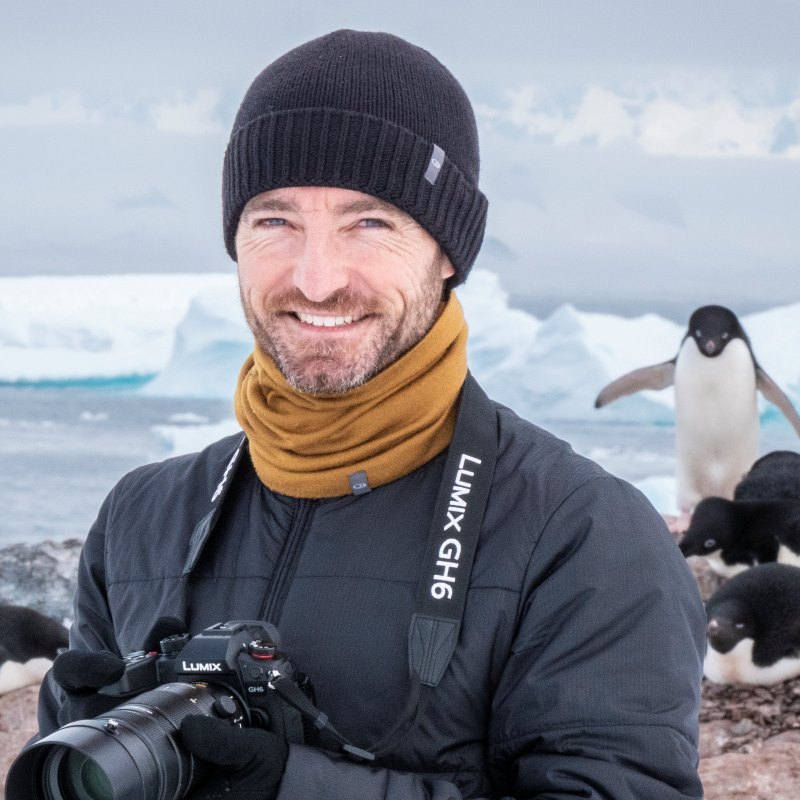
Chris Bray grew up circumnavigating the world for five years with his family on their homemade sailboat. He led several world-first, amphibious cart-hauling expeditions across the Arctic while studying electrical engineering, then became a wildlife photographer, establishing Australia’s largest photo tour company. With his girlfriend at the time, he also rebuilt a cheap, old, rotten, 29ft junk-rigged sailboat, and in 2011-12 sailed it over the top of Canada and Alaska, through the infamous Northwest Passage – the first junk-rig to ever make it through this Arctic maze.
A successful author, speaker and entrepreneur, Chris became the youngest-ever International Fellow of The Explorers Club, has won several Australian Geographic adventure medals and lectures at university on the topic ‘Decisions: when lives depend on them’. Now living on Christmas Island, he built and recently sold a luxury eco lodge, making time for his expanding conservation and deep-sea camera interests.
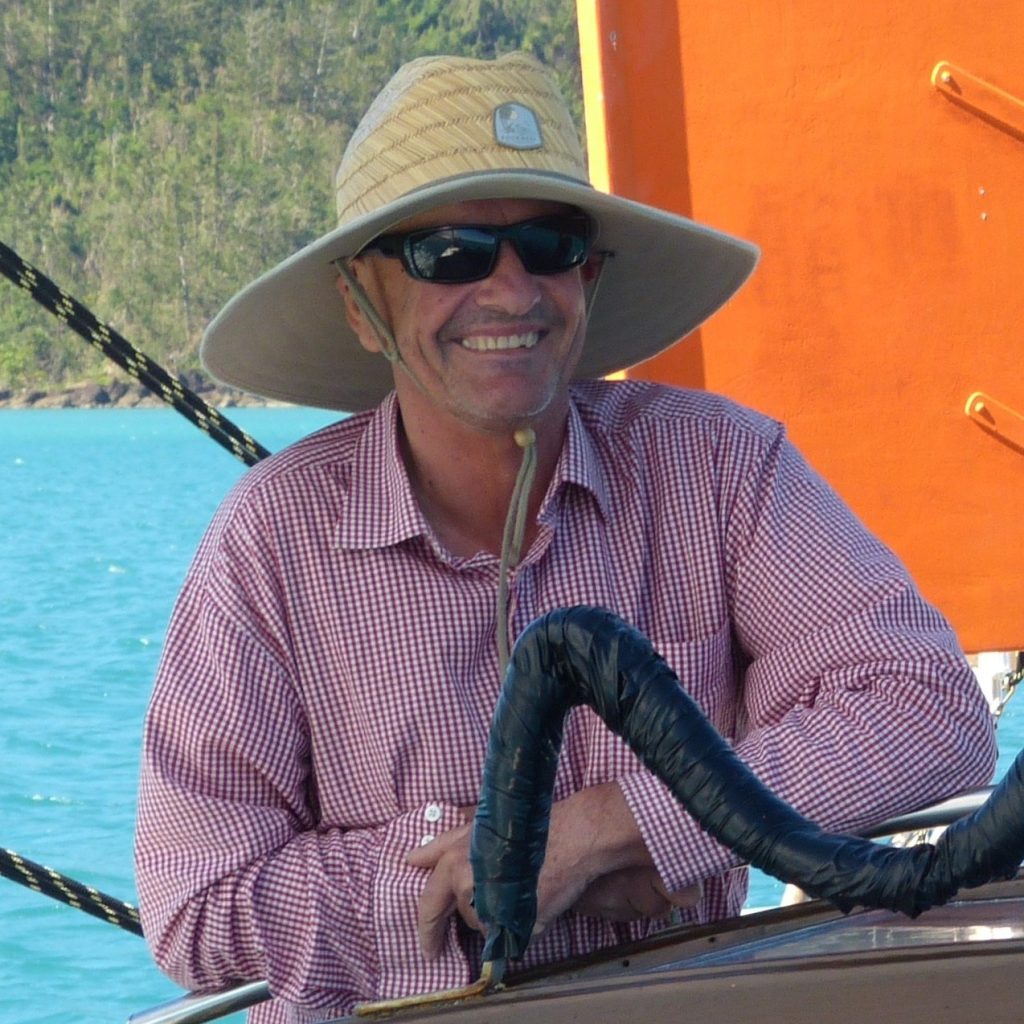
Graham Cox is a singlehanded sailor and author. He wrote the 20-part series, ‘The Junk Rig Hall of Fame’, for the Junk Rig Association, recording stories about Western sailors who have made significant contributions to the recreational use of the Chinese working-boat rig. He has converted two yachts to junk rig and sailed them extensively on the east coast of Australia, and has extensive knowledge about the historical and technical aspects of adapting the Chinese rig. He also wrote the acclaimed memoir, Last Days of the Slocum Era, which in part examines this process in detail.
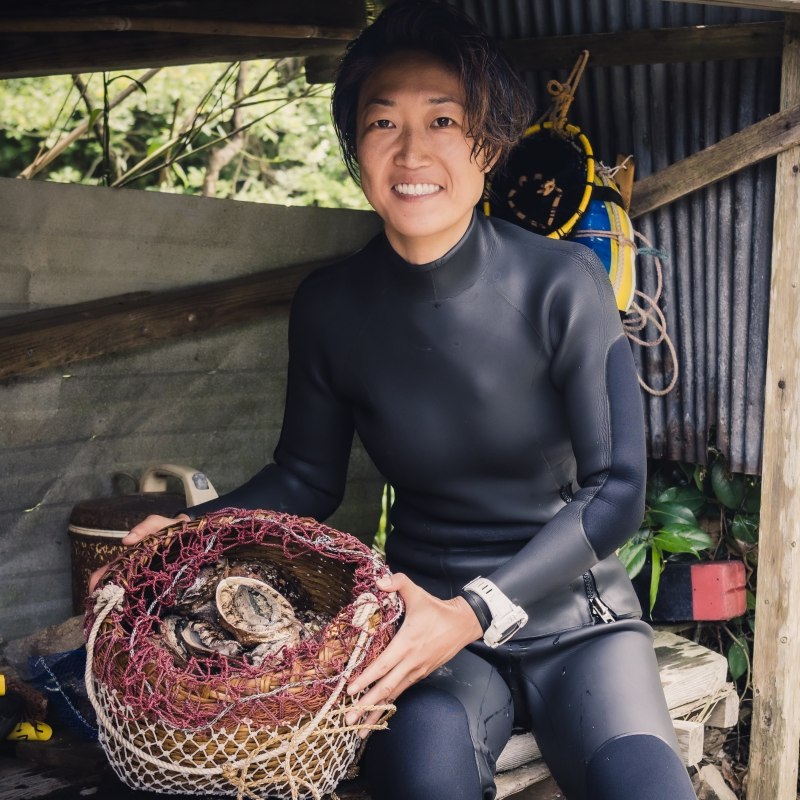
Aiko Ohno is an ama diver, photographer, and cultural storyteller from Tokyo, now based in Toba, Mie Prefecture, Japan. Inspired by the ocean from a young age, Aiko studied Marine Science at Tokai University and developed a deep connection with the sea through research and marine activities, including fieldwork on Iriomote Island, Okinawa. She later studied underwater photography and built a career as a photographer in Tokyo. In 2015, Aiko moved to a coastal fishing village in Toba after discovering an opportunity to become an ama diver. Since then, she has been practising ama fishing while documenting the lives, skills, and traditions of ama divers through photography. Combining her experience as a diver, photographer, and ocean enthusiast, Aiko shares the voices of ama divers and explores the relationship between coastal communities and the changing marine environment.

David O’Sullivan is a maritime and social historian who has worked both domestically and abroad in the museum and cultural heritage sector. A primary interest and expertise area for David is historical research on heritage vessels.
He has worked both on the Australian Register of Historic Vessels and with National Historic Ships UK. With a background in radio production, David has experience in oral history collection and is particularly skilled in community consultation and regional engagement work.
He has worked on interpretive and archival projects with regional museums in NSW, WA, and the NT, and conservation projects collaboratively with shipwrights, naval architects, and boat builders.
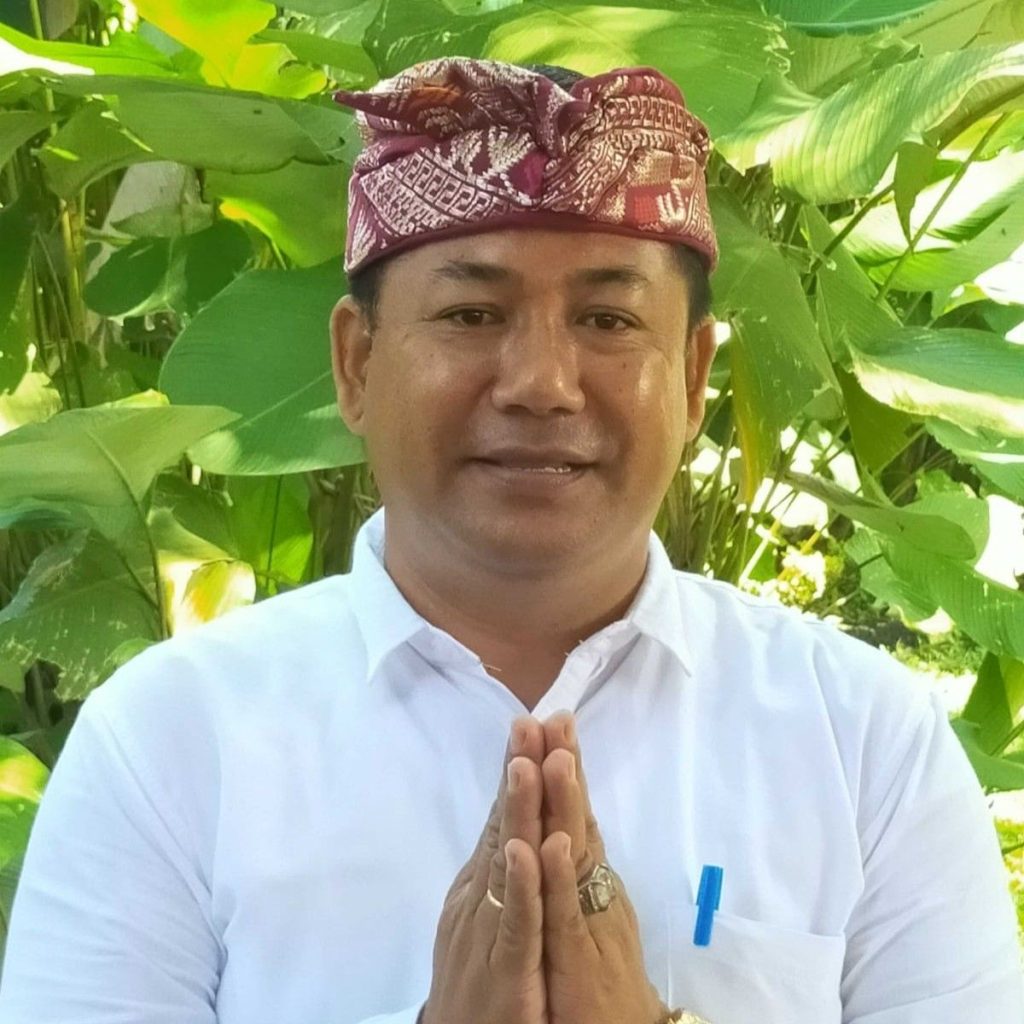
Made was born into a traditional fishing family in Candidasa, a small village on the coast of East Bali. He broke away from his family’s traditional life to pursue educational opportunities. He has been a member of the legislative council, a lawyer and is a strong advocate for the needs of the local village especially fisher families. He is very knowledgeable about the myths and history of the jukung including the importance of ceremonies to ‘bring the boat to life’, its launching and the protection of the sailors at sea and the modern influences and changing uses of the jukung today.

Kadek, also from Candidasa, followed the long sailing and fishing tradition of his family and first accompanied his father to sea at just six years of age. He learnt the inherited skills of jukung building and net making and it was his family that built the jukung for the 2027 Australian Wooden Boat Festival. He is a member of the local fishermen’s cooperative, an experienced sailor and has hands-on knowledge of all things regarding the building of jukungs.

Jeffrey Mellefont is an honorary research associate of the Australian National Maritime Museum, where he had a long career as a publisher and editor. Formerly a blue-water yachtsman, celestial navigator and skipper, Jeffrey became a specialist marine writer and photographer and has made a lifetime study of the maritime world of Asia. His work has been published in both popular and academic journals, and he has led tour groups exploring maritime history and traditional boatbuilding in Indonesia, Cambodia and India. He has also been a consultant and lecturer for Indonesian maritime tourism on traditional timber sailing vessels. Jeffrey has been visiting Indonesia since 1975 and speaks Bahasa Indonesia, a national language with its roots in the ancient world of sailors and seaborne traders.
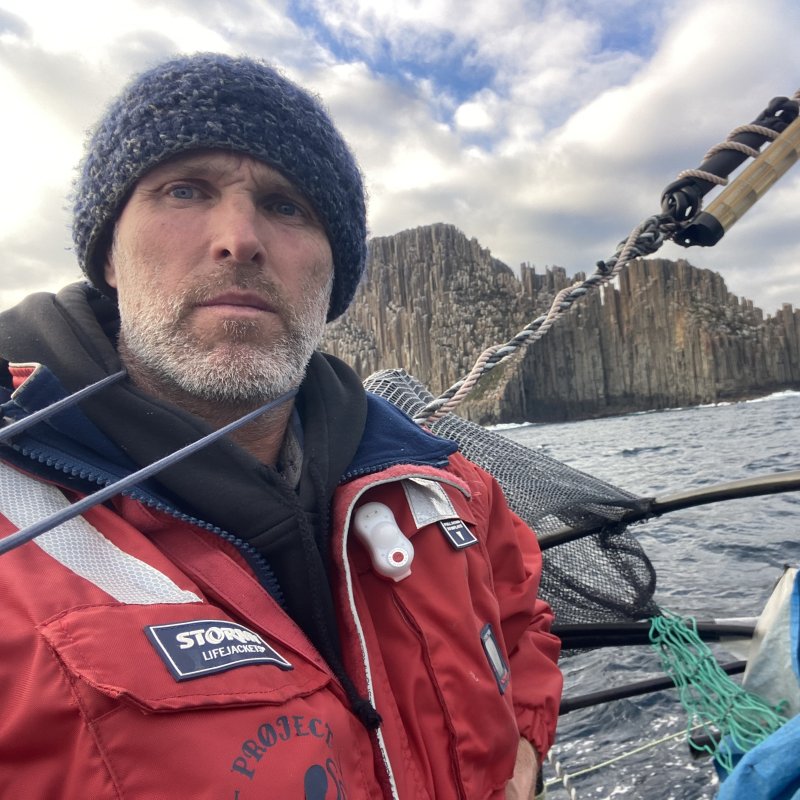
Samuel McLennan is a Tasmanian mentor, communicator and creator with a diverse background shaped by years of global travel and lived experience. He specialises in communication, personal transformation, and helping people see new possibilities in themselves, their work, and the world around them. Through Project Interrupt, Samuel combines environmental action with human development, inspiring people to take responsibility, create change, and live with greater purpose.
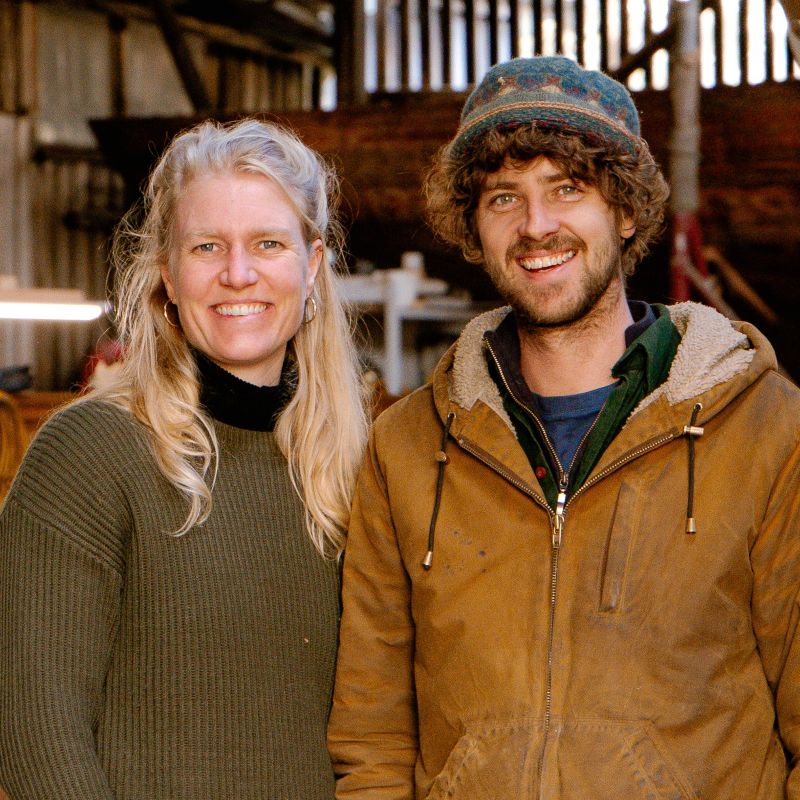
Seven years ago, Matt and Iefke embarked on an ambitious journey: building a wooden boat from scratch with no prior experience and a simple (or naive?) ‘let's just start and see what happens’ budget. Over the intense years that followed, they worked tirelessly on the build and ways to fund it, earned trade qualifications, learned hard-won lessons in perseverance and compromise, documented the journey for a supportive global audience, and – best of all – still enjoy hanging out together. The result is Tarkine, a 41ft pilot cutter featuring a Tasmanian Oak hull, diagonal over strip-planking, triple-glassed and built to last. Above all, they earned the rare satisfaction of fulfilling a dream. Now, Matt and Iefke stand at a new beginning: preparing to sail Tarkine across oceans to Iefke's home port in the Netherlands.
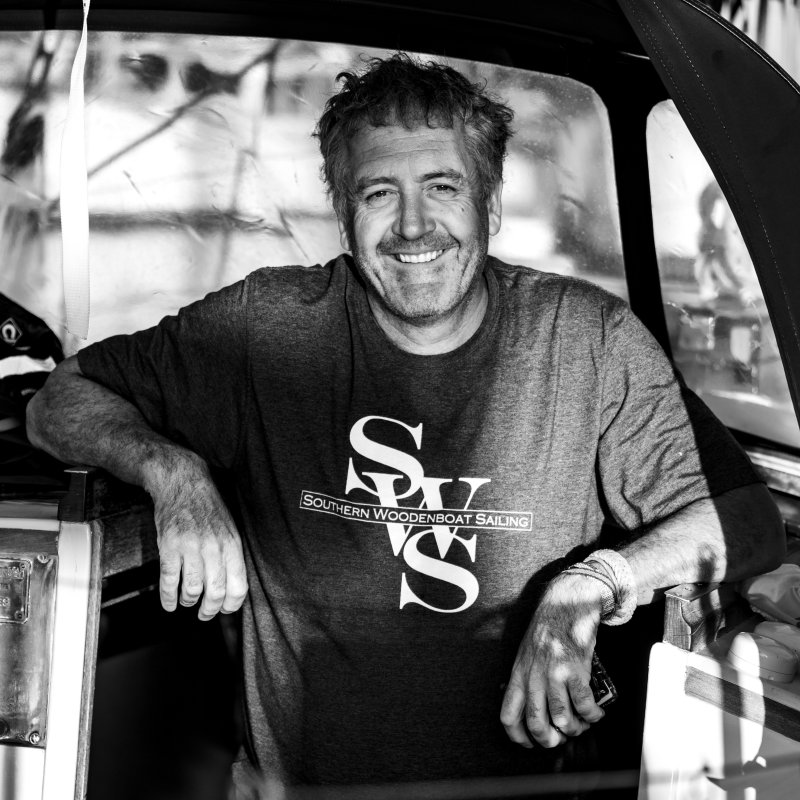
Mark Chew is a working photographer who, with his wife Sal, lives aboard their 48 year-old S&S Swan Matilda, currently based in Valencia, Spain.
His photography centres around development, aid and education projects in East Africa, South East Asia, the Pacific and Australia.
When not taking photographs Mark spends his time sailing and promoting the values of traditional boat custodianship, via his online magazine, www.southernwoodenboatsailing.com which now reaches 25,000 people every month. Mark is also an active board member of the Australian Wooden Boat Festival.

Jesse Liu has taught at National Taitung University since 1994. He is currently Professor in the Department of Life Sciences and Director of the Center for Eco-Friendly Agriculture and Fisheries Industry Promotion. He also serves as Secretary-General of the Austronesian Community College Development Association.
His areas of expertise include Indigenous marine culture, traditional ecological knowledge, ethnobiology, environmentally friendly agriculture and fisheries, and community-based cultural revitalisation. Since 1996, he has devoted himself to the reconstruction and revitalisation of Indigenous ecological culture in Taiwan. In 2003, he began working with Indigenous communities to restore the traditional knowledge, construction techniques and sailing culture of bamboo rafts. His long-term work connects academic research with community participation, cultural transmission and practical voyages at sea.
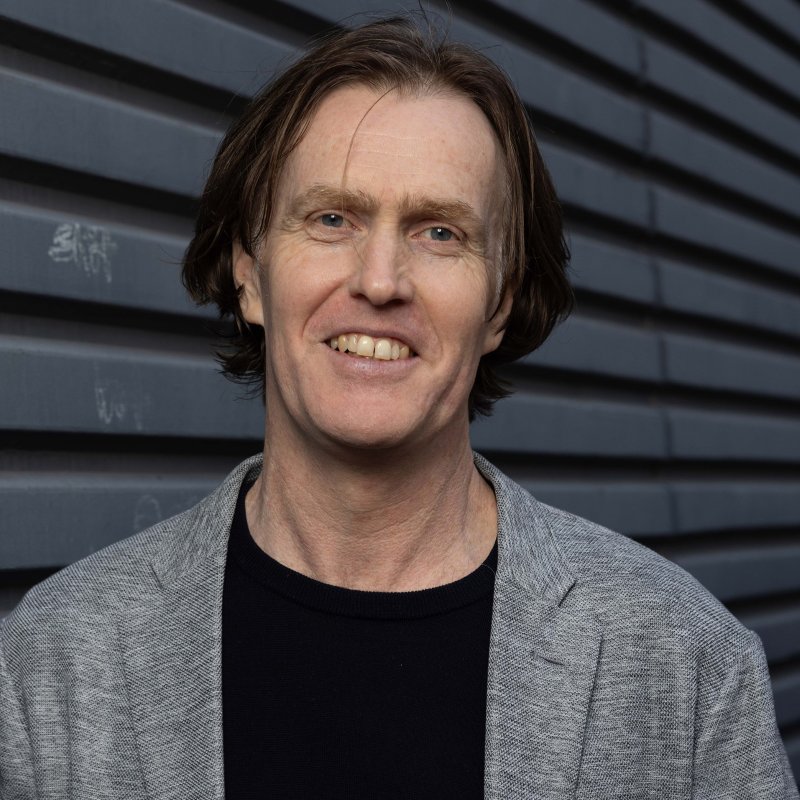
Tim Stone is an award-winning producer, writer and art journalist with extensive experience working across broadcast, digital and print mediums.
In the pursuit of powerful stories worth sharing, Tim deep-dives into archives across the globe. His documentaries, shorts and reportage have been broadcast in Australia and screened at prestigious film festivals across the globe, including Raindance, Hollyshorts, Cannes Short Film Corner and the Streamy Awards.
Tim was awarded a 2023 Churchill Fellowship to retrace the journey taken by escaped convicts that sailed from Tasmania across the Pacific to Japan and China before their miraculous return to England in 1830. His fellowship will culminate in a major exhibition to be staged in Australia ahead of the bicentenary of their daring escape.
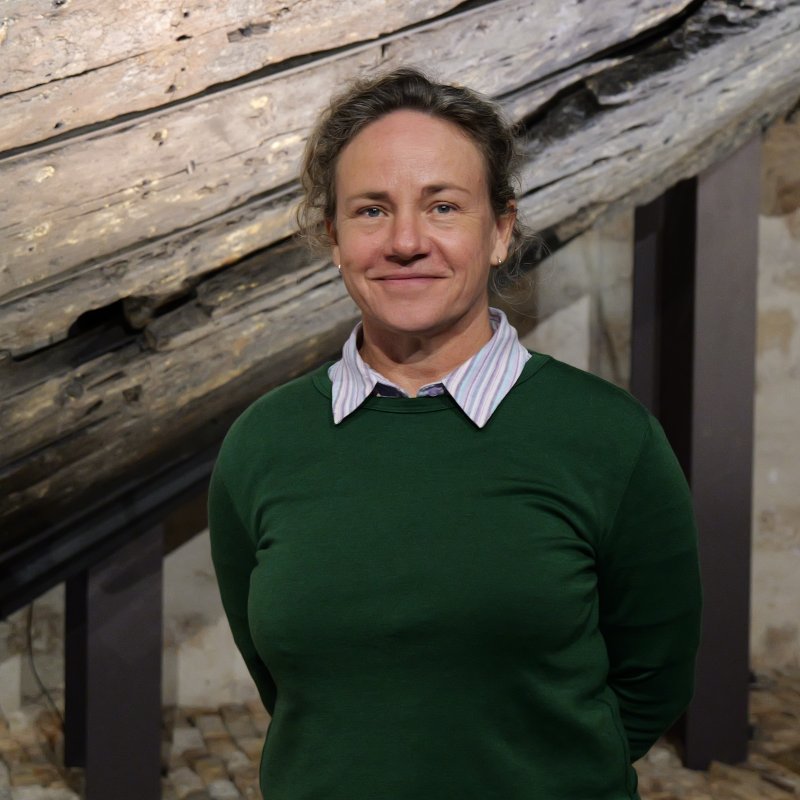
Dr Corioli Souter is an archaeologist, curator, cultural heritage manager and Head of the Department of Maritime Heritage at the Western Australian Museum. She has been a practicing archaeologist since 1992 also contributing to collection research, exhibition development, site interpretation and management, film documentaries, academic teaching, and capacity building both in Australia and internationally. Corioli played a key curatorial role in the development of Boola Bardip, the Western Australian Museum’s landmark redevelopment, helping shape its conceptual and thematic frameworks and curating major content. Her research and community projects align with the Museum’s ‘people-first’ philosophy, promoting place-based, collaborative interpretation of maritime archaeological sites across Western Australia and the Indian Ocean region. Committed to ethical, inclusive, and sustainable practices, she advocates for greater accessibility to underwater cultural heritage and museum collections.
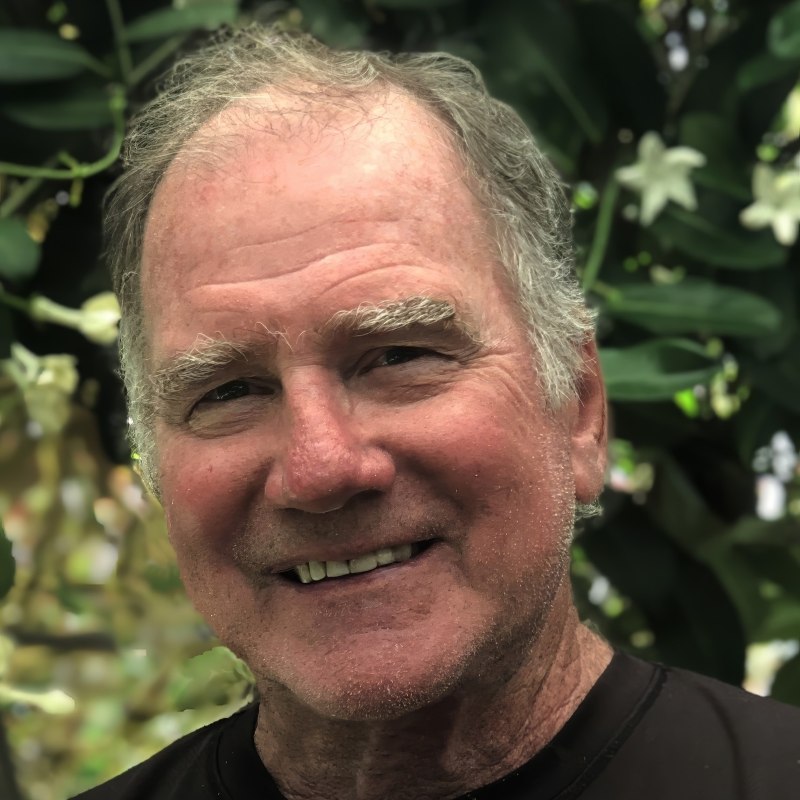
The story of Australia’s first locally built ship – constructed 300 years ago on a remote island off the west coast – has long fascinated author and maritime historian Dr Howard Gray. Since moving to the midwest in 1980, he has explored the diverse marine ecosystems and rich maritime heritage of the Houtman Abrolhos Islands through diving, fieldwork, scientific research and archival study. His Ph.D. on the rock lobster fishery and his work on Frederick de Houtman further deepened that knowledge. Howard has contributed to numerous maritime organisations and written several award-winning books, sharing his expertise through radio, articles, tours and lectures. With the 300th anniversary of the Zeewijk shipwreck approaching, he is now focused on the remarkable survival story and the first European ship ever built in Australia, the Tortelduijf.

Mirjam Hilgeman joined the Duyfken for a two-week stint in 2009 when it was being readied for a voyage and has been with the vessel, a replica of the first European ship to reach Australia, ever since.
As Shipkeeper on the Duyfken, Mirjam looks after the vessel and supervises all volunteers participating in Duyfken’s volunteer programs. Her role covers teaching maintenance, sailing the vessel, training the guides, and sharing her knowledge of this unique vessel with anyone interested to learn.

Session Moderator for Celebrating 20 years of the Australian Register of Historic Vessels.
Liam McGeagh is Outreach Program Coordinator at the Australian National Maritime Museum where he coordinates the Museum's grant program, administers the Australian Register of Historic Vessels (ARHV), and is Secretary for the Australian Maritime Museums Council. Liam has worked on the ARHV team since 2024, which manages vessel applications, supplies information to members of the public, conducts research into watercraft on the Register, and provides secretarial support to the ARHV Council and Steering Committee. This is Liam's second Australian Wooden Boat Festival, and he is excited to be joined by a panel of experienced colleagues with plenty of stories to share.
Panel member for Celebrating 20 years of the Australian Register of Historic Vessels.
Alan Edenborough has more than 50 years’ involvement with maritime heritage, including leading roles with Sydney Heritage Fleet where he led the discovery and salvage of the barque James Craig. Alan is past president of the Australian Maritime Museums Council, a member of the Council and Steering Committee of the Australian Register of Historic Vessels, former Secretary-General and Executive Council member of the International Congress of Maritime Museums, and a founder of the ICMM Ships Committee.
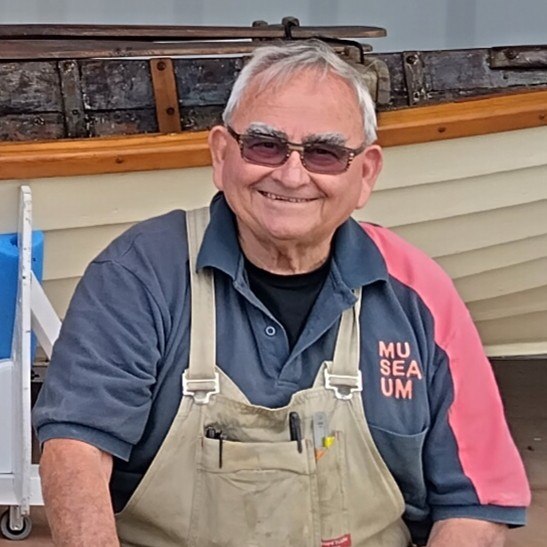
Panel member for Celebrating 20 years of the Australian Register of Historic Vessels.
With a family background in shipbuilding and lifelong involvement with boats in South Australia and Tasmania, Peter has extensive experience in vessel restoration, documentation, and maritime heritage. He has held leadership roles with the Australian Wooden Boat Festival and the Wooden Boat Guild of Tasmania and has contributed to the Australian National Maritime Museum since 2015. Peter has specific expertise recording historic vessels through photogrammetry and traditional lines-taking methods.
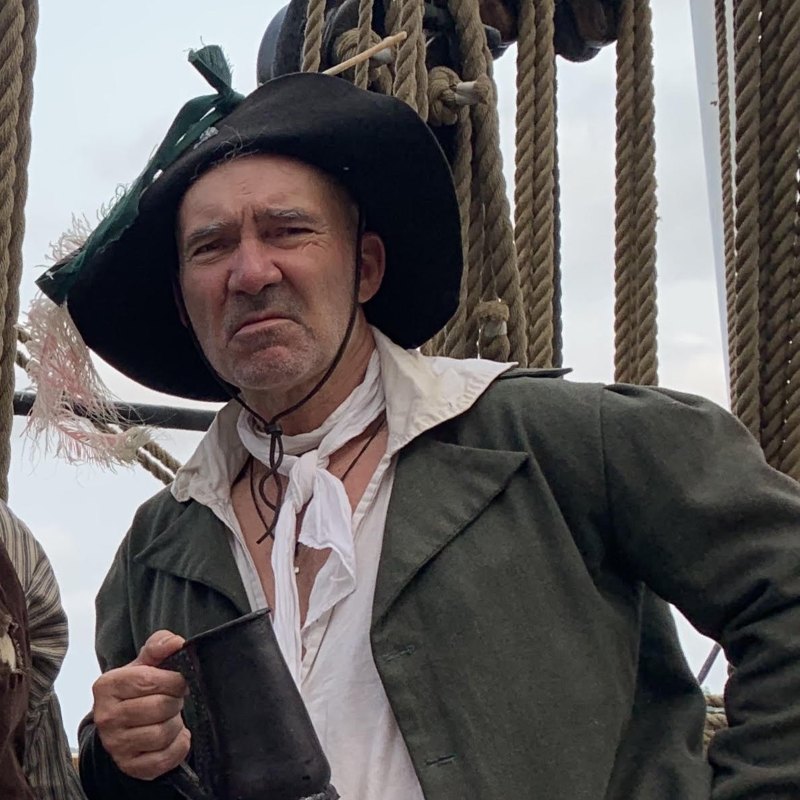
Dr Stephen Gapps is a historian with research interests in the Australian Frontier Wars, historical reenactments and colonial maritime history. Stephen was a curator and senior curator at the Australian National Maritime Museum between 2010 and 2022. He developed several major exhibitions including Under Southern Skies and Shaped by the Sea. Two areas of particular research interest have been Australia’s Indigenous watercraft and Chinese watercraft in Australia.
Stephen’s work has been recognised with a NSW Premier’s History Award in 2011 for his book Cabrogal to Fairfield: A history of a multicultural city and the Les Carlyon Award for the writing of military history in 2019 for his book The Sydney Wars – Conflict in the early colony 1788-1817.
Stephen currently works as an historian at Artefact Heritage & Environment and as a consultant historian with the Australian Museum’s First Nations Repatriation team. He has occasionally been seen dressed as a pirate on various tall ships in Sydney.

Hingor Chung is a long‑time Tasmanian educator and community advocate with a strong commitment to cultural understanding, bilingual capability and Chinese Australian heritage. Her work spans classrooms, national conferences and community organisations, alongside outdoor education experiences that included volunteering on the Lady Nelson and leading student cycling trips on the West Coast, Flinders Island and Bruny Island, as well as explorations of the Trail of the Tin Dragon. Hingor is President of the Chinese Community Association of Tasmania, a former presenter and consultant with ABC TV program AsiaWise, and a current member of the SBS Community Advisory Committee. A child of Chinese market gardeners and a speaker of the hoisanwa Pearl River Delta dialect, she brings a personal connection to the histories she shares — including the maritime world of Zheng Yi Sao, whose leadership and coastal heritage resonate strongly with her background and interests.
David has been developing award-winning exhibition experiences for the past 18 years across Museums Victoria, State Library Victoria, Port Arthur Historic Site, and Cascades Female Factory. He specialises in engaging, multi-modal narratives that deliver unique, memorable and immersive experiences, believing in creating unforgettable audience experiences through empathy, leading-edge technology and attention-grabbing writing.
Using an audience-centric approach, David develops experiences combining physical and digital interactivity, engaging interpretation, collection objects and multimedia components. He uses design thinking to bring project teams together and deliver maximum engagement with intended audiences.

Panel member for Celebrating 20 years of the Australian Register of Historic Vessels.
With a family background in shipbuilding aFrances Walsh is the New Zealand Maritime Museum Hui Te Ananui a Tangaroa’s editor, writer and researcher, having worked as a journalist, trade unionist and teacher. Her social history Inside Stories: A History of the New Zealand Housewife 1890-1975 was published in 2011. Frances is currently studying for a Master’s degree and researching the girls and women (a.k.a. ship girls) who late into the 20th century in Aotearoa went onto the wharves and ships in search of seafarers. nd lifelong involvement with boats in South Australia and Tasmania, Peter has extensive experience in vessel restoration, documentation, and maritime heritage. He has held leadership roles with the Australian Wooden Boat Festival and the Wooden Boat Guild of Tasmania and has contributed to the Australian National Maritime Museum since 2015. Peter has specific expertise recording historic vessels through photogrammetry and traditional lines-taking methods.
ABOUT THE TALKS
Back in 2010, more people had been into space than successfully sailed the Northwest Passage, the infamous Arctic sea route above Canada and Alaska, and no one had done it in a junk-rigged sailboat.
So when Chris Bray and his girlfriend at the time bought a tiny (29ft), cheap ($20k, on an interest-free loan), wooden (rotten), junk rig sailboat, sight unseen (from someone who’d also never seen it), and decided to fly to Canada where it was sitting (filled with rainwater) in a car park, rebuild her and sail up into the ice, it’s no surprise to learn that it leaked, or that Chris now presents guest lectures at university on the topic ‘Decisions – when lives depend on them’.
What is surprising, though, is not just that they made it through, but the amazing adventure the pair had, cruising this wonderfully remote, wildlife-filled wilderness.
This session outlines the history of adapting junk rig for yachts, beginning with Blondie Hasler’s famous Folkboat, Jester. Hasler modified the rig for use by a single operator from a central control position in the boat, then campaigned Jester in the inaugural Singlehanded Transatlantic Race (OSTAR) in 1960.
This history is followed by a brief explanation of Hasler’s modifications, the technical aspects of converting yachts to junk rig, plus methods of handling the rig. There is a very brief mention of other practitioners, such as the American, Tom Colvin, whose designs follow more traditional Chinese rig principles. The presentation is complemented by a working model of Hasler’s rig, which will be on display elsewhere during the festival.
Ama diving represents a unique relationship between people and the ocean that has continued for thousands of years in Japan. With a history rooted in coastal communities, ama divers have passed down their knowledge, skills, and sustainable ways of harvesting marine resources through generations.
In this presentation, I will introduce the world of ama divers from the perspective of someone who has joined this tradition and experienced it firsthand. After working as a photographer in Tokyo, I moved to a small coastal fishing village in Toba, Mie Prefecture, in 2015 and began my life as an ama diver.
I will share how ama observe the ocean, respect nature, and live with seasonal changes, while also discussing the challenges they face today, including climate change, changes in marine ecosystems, and the difficulty of passing this knowledge on to future generations.
Through the story of ama divers, I hope to show the importance of preserving the connection between coastal communities and the ocean.
In 2025 David O’Sullivan, from the Western Australian Museum, travelled to the Cocos (Keeling) Islands to document past and present maritime traditions in this Indian Ocean territory, nearly 3,000 km from the Australian mainland. The population of these islands primarily identify as Cocos Malay, with their own unique culture, language and history. David’s presentation is an account of his research work among the small communities on Home Island and West Island, with a focus on boatbuilding and sailing practices in these remote islands.
After 13 months of high adventure, danger and friendship the ‘Fellowship of the Tawali Pasana’ sailed into the history books.
Jump aboard for a fast-moving, interactive, multimedia presentation where Thor shares the tears and triumphs, laughter and learnings sailing under three PNG master sailors.
The presentation will begin with a short film created in East Bali that covers the origin myth, history and symbolism of the shape and painting of jukung boats. It will show the traditional building methods and the ceremonies required according to the Hindu dharma customs for the jukung. The daily life of local fishermen and markets for their catch is seen as well as some insights into some traditional cooking and so on. There will be plenty of time for questions to the Balinese who have travelled to Hobart to share their knowledge on all things jukung.
This presentation focuses on the distinctive wooden boatbuilding and seamanship traditions that connected tropical northern Australian First Nations people with Asia through networks of maritime trade and cultural exchange, for centuries before European settlement.
Riding the monsoon cycles, people we call Macassans from the Indonesian island of Sulawesi worked with Arnhem Land and Kimberley peoples during annual visits to harvest sea slugs or trepang, an unlikely seafood luxury and aphrodisiac in high demand from Imperial China. The Macassans’ sailing ships, recorded vividly in Australia rock and bark art, were built with ingenious construction techniques that have survived to modern times to win UNESCO recognition as unique cultural heritage.
Project Interrupt is the story of Heart – a boat built from marine debris collected along the coast of Southern Tasmania.
Join Samuel McLennan as he shares how discarded ropes, buoys and other marine waste were transformed into a vessel that sailed from Hobart to Sydney. Discover the story behind the boat, the challenges of building and sailing her, and how creativity can transform rubbish into something extraordinary.
Join Matt and Iefke for an informal, interactive conversation about their seven-year journey building Tarkine, a 41ft Tasmanian Oak pilot cutter, from scratch with no prior experience and a leap-of-faith budget.
Accompanied by a photo showcase, this session is an open floor: bring all your burning questions about building a boat of your own, trade qualifications, technical specifications, surviving a giant project together and what lies ahead.
His company’s Kumundar initiative is designed to be a practical response to these issues, preserving the natural environment and passing on culture, history and wisdom to future generations.
Join the Derwent Class shenanigans and help us celebrate the Class’s 100th birthday! We’ll crown a World Champion, raise a glass to our remarkable past, and be part of an exciting future as we mark a century of sailing, friendship, competition and community.
There are about a dozen communities left on earth where people in traditional craft still rely on their sails to carry out meaningful work. They don’t do this for romantic reasons, but because they can’t afford a cheap diesel engine or the fuel to drive it. These working sailing fleets, that were originally responsible for binding humanity into a single ecological and historical system, have, almost by accident, become the last bastion of a disappearing tradition that globalised the human story.
One such community is the dhow sailors of the East African Coast.
Mark Chew, was born in Kenya, and returns there every year working as a photographer in the refugee camps and slums of the region for development and aid agencies. He also regularly visits the Indian Ocean coastline, making friends with local sailors, sailing on their boats and trying to understand the history, construction and function of these ancient, magnificent lateen-rigged craft.
‘Disappearing Dhows’ is a personal memory of the time he has spent sailing dhows on the East African coast. It will be accompanied by his contemporary photographic record of the sailing craft in this part of the world, documenting their construction, their function, their culture, and the people who sail and race them.
How can an interrupted Indigenous boatbuilding tradition be brought back into practice? Traditional Taiwanese bamboo sailing rafts used Ma bamboo for the hull, yellow-rattan skin for bindings, sea hibiscus fiber for the sail, and paddles and wind for propulsion. This natural-material knowledge was largely interrupted around the 1950s–1960s, then reconstructed with Indigenous communities from 2003 onward.
Built in 2023, a bamboo sailing raft crossed the Kuroshio Current between Taiwan and Green Island in both directions in June 2024. Elders’ knowledge transformed the craft to improve its buoyancy and stability and Jesse Liu’s team is now planning a round-trip experimental voyage between Taiwan and the coast of China in 2027, to test the proposal that such vessels connected Austronesian peoples across the Taiwan Strait more than 6,000 years ago.
In 1830 when five escaped convicts were apprehended in London and put on trial for the piracy of HM brig Cyprus in Van Diemen’s Land a year earlier, their encounters with American whalers, Pacific kings and samurai in Japan made headlines around the world. But without evidence, for almost 200 years many of the men’s claims were never believed.
Following the 2017 discovery that the Cyprus visited Japan, Tim Stone and research partner Aya Hatano have reunited descendants of the convicts and samurai in Japan, and in 2024 with the support of a Churchill Fellowship, Stone retraced the vessel’s ill-fated final voyage, revealing new evidence about the fate of her missing crew and the possible location of the shipwreck.
As Western Australia approaches the tricentenary of Zeewijk (1727) and the quatercentenary of Batavia (1629), these two Dutch East India Company (VOC) shipwrecks in the Houtman Abrolhos remain among the most powerful and confronting episodes in Australia’s pre-colonial maritime past. Both are stories of catastrophe and survival on the edge of the known ‘European world’ — one infamous for mutiny and massacre, the other for endurance and the building of Australia’s first ocean-going vessel. Yet after six decades of archaeological investigation, their significance is still evolving.
This presentation is based on new research from a partnership between the WA Museum, universities, and collecting institutions in Australia and Europe. The project returns to original VOC archives, re-examining museum collections dispersed across two hemispheres, and applying new analytical and digital techniques. Through archaeological study of the ‘Batavia’s Graveyard’ victims, re-imaging of the wreck sites and survivor camps, along with a reassessment of objects, the project is recovering the identities, experiences, and material worlds of those aboard. It is also asking what these wrecks mean today. Community research in Geraldton and Fremantle is revealing how VOC heritage lives on in local memory and identity, while parallel work centres on Aboriginal perspectives and representations of early Dutch visitors to their Country.
Hear from individuals who’ve played key roles in that history, on how to navigate without instruments, how to sail a waka and what it’s like to live on and lead a modern voyaging waka.
Duyfken is one of the few replicas of a Dutch East India Company vessel that is actively sailing, and the only one in Australia. When Duyfken was built it was unclear if she would be capable as an ocean-going vessel. To the builder’s credit, Duyfken has sailed over many a sea and done ocean crossings. Besides going to sea, she also works to bring history to life and give visitors and crew a taste of what it is to sail and live aboard a Dutch East India vessel back in the early 1600s.
Launched at this very festival, the Australian Register of Historic Vessels this year celebrates two decades of preserving and promoting the stories of people and vessels who shaped Australia’s maritime history. Join us for an engaging and informative panel discussion on the history of the ARHV, the role it plays, and what the future holds. Facilitated by the Australian National Maritime Museum, we will be joined by past and present contributors to the Register to hear their reflections on the highlights and challenges of running a heritage database with community at its core.
From the 1870s to the 1910s, Australia’s northern coastal areas were often described as a ‘mis-en-scene of the Canton River’. During this period a fleet of junks and hundreds of sampans were built by Chinese workers in northern Queensland. Junks were built at Cooktown for beche–de-mer fishing, and at many locations along the riverways of Queensland sampans were built to transport produce. The large capacity and versatility of sampans made them ideal for mining ventures as well. At times they were commandeered for flood rescue, mail delivery and as police boats. Yet Chinese vessels do not appear in the canon of Australian ship and small boat building histories. Their ubiquitous presence in Australia’s north in the late 19th and early 20th century needs revisiting and further historical investigation.
Join Pecha Kucha Hobart & AWBF for a casual and relaxed evening featuring an eclectic series of speakers who will present very short, visually-based stories.
Active between 1801 and 1810, Zheng Yi Sao was a Pearl River Delta maritime strategist who commanded around 400 ships and between 40,000 and 70,000 pirates, enforcing discipline, negotiating political settlements and shaping coastal order. She later secured amnesty, retained part of her fleet, retired peacefully, and died in 1844 — an extraordinary ending for a leader of her scale.
Rigger Bob Downes will talk about why new materials should bring old techniques back into the ditty bags of modern professional riggers, using as an example some of the design decisions made while rigging Tally Ho.
In the middle of the convict transportation era, as the Cascade Female Factory overflowed with female convicts, changes to the probation system led to a sudden need for more convict accommodation. In Hobart, HMS Anson, an ex-warship, ex-lazaret, ex-transportation ship, was used as a probation station, a place for female convicts to live and work for six months following their arrival in Van Diemen’s Land. This strange convict accommodation experiment lasted just six years. This talk will look at the life of the Anson and the role it played in the probation of female convicts.
During the 19th and 20th centuries in New Zealand girls and women (colloquially called ship girls, tima molls, or boaties) had sex and relationships with foreign seafarers. But while it was accepted that a sailor had a girl in every port, a girl who had a sailor on every ship was an aberrant figure—variously stigmatised, pathologised, criminalised, and locked up. They were also pitied by God-fearing men and women, and feminists. Ship girls saw themselves and their world rather differently.